
Our Process for Gate Work
How a gate job generally runs from the first look at the site to the final test, and the safety and code rules that apply to gates in Minnesota.
Gate jobs vary from a new hinge to an automated entry with a keypad and an intercom, but most follow the same order. The outline below is how the trade generally works; your job may skip steps or add some.
A Gate Job, Step by Step
- The first call. You describe the gate, its width and what it is doing, or what you want built. Photos sent by email help.
- The site visit. The property is walked in person: the ground, the opening and the gate are looked at, and what the gate needs is settled before an estimate is written.
- Approvals and locates. Permits, association approval and the utility locate are settled before anyone digs.
- Posts and footings. Holes are dug below the frost line and posts set plumb in concrete, which then cures.
- Hanging the gate. The gate is hung level, with hinges, rollers, track and latch adjusted until it moves freely by hand.
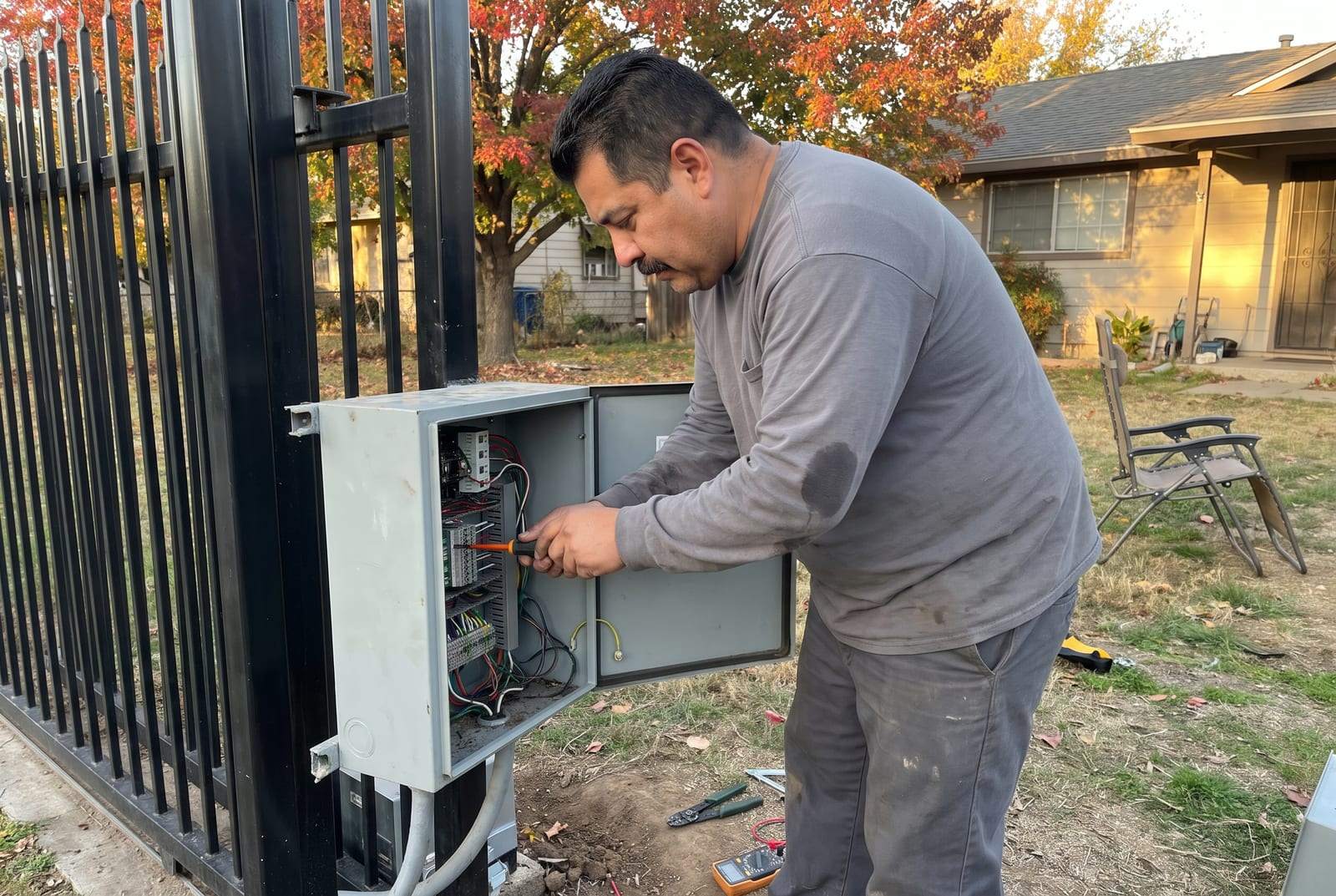
- Operator and devices. On an automated gate, the operator, photo eyes, edge sensors and entry devices are mounted and wired.
- The final test. Travel and limits are set, safety sensors and auto-reverse tested, and the manual release and remotes checked.
Rules and Standards for Gates
Several rules apply to gates in Minnesota. Which ones touch your job depends on whether the gate is automated, where it sits and who uses it.
| Rule or standard | What it covers | Who it affects |
|---|---|---|
| UL 325 | Safety of gate operators: entrapment protection, auto-reverse, manual release, usage classes | Every automated gate and anyone installing or replacing an operator |
| ASTM F2200 | Construction of automated vehicular gates: openings, pinch points, roller guards, stops and gaps | New automated gates and older gates being automated |
| City permit and setback rules | Where a gate and fence may sit, their height, and when a permit or review is needed | Owners in Bloomington and each nearby city, by its own code |
| Fire access requirements | Gates across fire lanes and access roads: approval, width, and a way for crews to open them | Associations, apartments and businesses with gated drives |
| Utility locates (Gopher State One Call) | Marking buried lines before any digging for posts or trenches | Anyone digging in Minnesota, homeowners included |
| Electrical code | Wiring, conduit and grounding for powered gates and their devices | Gates that need new power run to the operator |
What to Have Ready
A little preparation makes the visit and the work go faster:
- Your property survey or plat, if you have one, showing the lot lines.
- Any association rules or approval forms for gates and fences.
- The make and model of an existing operator, keypad or remotes, if you know them.
- Where power is available, such as an outdoor outlet, a garage panel or a light post.
- A clear path to the gate: cars moved, pets inside, snow or leaves cleared.
- Who will need access afterwards, and how: residents, guests, deliveries, emergency crews.
Frost Depth and Footings
In the southern half of Minnesota, including Hennepin County, the building code puts frost depth for footings at 42 inches. Clay soil holds water, and water expands as it freezes, so a post set above that depth gets pushed up a little each winter and drops back crooked in spring. On a gate, that shows up as sag, rubbing on the driveway and a latch that misses its keeper.
Gate posts are set in concrete below the frost line, with the footing sized for the gate’s weight and leverage. A long swing leaf puts much more load on its hinge post than a walk gate does, so its footing is wider and deeper. A level, plumb post at the start is the cheapest fix there is.
Permits and Safety Questions
What is entrapment protection?
It is the set of devices that keeps a moving gate from trapping a person or a car. UL 325 calls for two independent means of protection for each area where someone could be caught, such as photo eyes plus an edge sensor, and an operator that will not run if those devices are missing or faulty.
How do fire trucks get through a closed gate?
Gates across fire access roads need the fire department’s approval and a way for crews to open them, often a Knox key switch or a sensor that opens the gate at a siren. The local fire marshal sets which one; that check belongs at the planning stage, not after the gate is up.
Who gets the permits?
That is settled before work starts. City rules decide what needs a permit, and an association may need its own approval as well. Keep a copy of any approval with the gate’s paperwork.
Ready to start with a look at your gate? Call or schedule a visit.